
A successful refurbishment project starts long before work begins on site. Before programmes are finalised, deliveries are scheduled or areas are stripped out, there’s a more fundamental question to answer: how does the organisation using the building actually operate?
Sounds so simple, right? But it’s an important part of getting a project right that’s overlooked far too often.
In hospitals, schools, workplaces and other occupied buildings, a refurbishment doesn’t happen in isolation. People may still need to work, learn, provide care or access essential services while construction is taking place.
Effective refurbishment project planning therefore needs to consider much more than the physical works. Here, we look at why understanding the building, its users and the day-to-day operation should come first.
Why operational understanding is so important in refurbishment
Two refurbishment projects can involve similar construction work on paper but need very different approaches in practice.
Access restrictions, working hours, sensitive equipment, safeguarding requirements, deliveries, shutdowns and even how people move through the building can all influence the way the project is delivered.
Understanding these factors early means the contractor and client can build a programme around how the organisation or department actually works, rather than expecting everyone else to work around the construction programme.
That’s especially important when managing refurbishment in occupied buildings. A little more thought at the planning stage can help avoid unnecessary disruption later.
At PCI, we regularly work in live and operational healthcare, education and commercial environments. That means considering phasing, access, deliveries, segregation, disruptive works and stakeholder communication, as well as what’s happening immediately outside the construction area.
Start your refurbishment project with the people using the building
Good refurbishment project management starts with understanding who will be affected by the work.
That might be employees working next to an office refurbishment, pupils and staff elsewhere on a school site, or clinicians and patients in an operational healthcare environment.
Their needs shape practical decisions throughout the project. When can noisy work take place? Which routes need to stay accessible? Could dust or vibration affect nearby areas or equipment? What are the safety implications? When can services be isolated? Are there busy periods when deliveries should be avoided?
These might seem like small details individually, but together they can have a big influence on how smoothly a project runs.
Communication matters here too. Clear points of contact, agreed escalation routes and regular conversations make it much easier to deal with issues quickly and keep everyone informed as the project progresses.
Identify refurbishment project risks early
No refurbishment is completely free of surprises. Good planning is about identifying as many potential refurbishment project risks as possible before they become problems on site.
That means looking beyond the immediate construction area. Existing services, neighbouring departments, specialist equipment, access routes and third-party contractors can all affect delivery.
On PCI projects, planning can include information release schedules, document registers, technical submission tracking and project risk or gap analysis. We can also coordinate specialist design requirements to identify dependencies between consultants and trades early.
Put simply, we want to know what could affect cost, safety, programme or day-to-day operations, and what we can do about it.
Plan construction around ongoing operations
With an occupied building refurbishment, like a school or hospital, construction and everyday operations need to coexist.
Depending on the project, that might mean phased working, careful segregation and signage, scheduling deliveries at quieter times, controlling dust and noise or coordinating shutdowns and isolations.
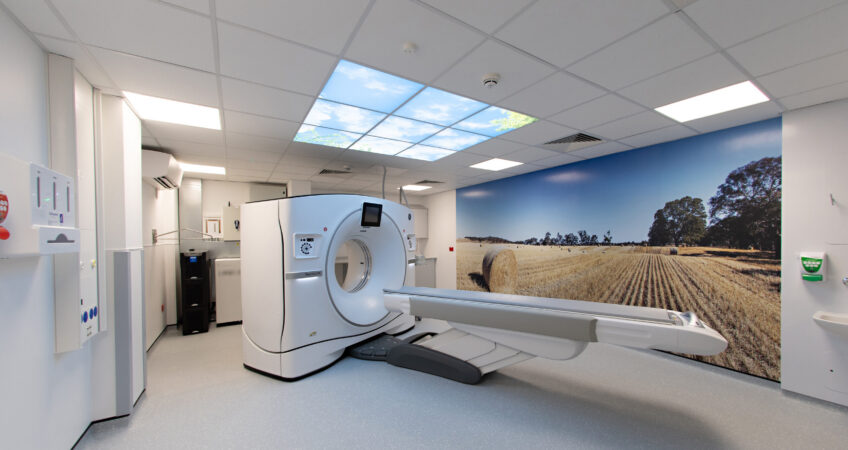
Our £1.2 million CT Scanner project for Beds NHS Trust is a good example. Over a 23-week programme, the project involved working in occupied spaces, coordinating several specialist contractors and using a crane to deliver plant enclosures and framework to the roof.
The construction work was only one part of the picture. Planning how it could be delivered around an operational healthcare environment was just as important.
Better refurbishment planning creates better cost and programme visibility
Getting these conversations started early isn’t only about keeping disruption to a minimum. The added benefit is also an improvement in commercial decisions.
If access restrictions, phasing, specialist interfaces or shutdown requirements only come to light once work is underway, there can be consequences for both programme and budget.
Early planning gives everyone more time to understand those dependencies, consider the options and find practical solutions.
It can also highlight opportunities to create better value. Looking carefully at design, sequencing, construction methods and project requirements can identify savings or efficiencies without simply cutting the specification or compromising the finished result.
More than a refurbishment
For us, effective refurbishment project planning starts with understanding how the client needs to keep operating, identify risks early and build the delivery approach around the people, programme and practical requirements of the project.
With more than 40 years of experience and extensive work across live healthcare, education and commercial environments, we’ve learnt that successful refurbishment projects rely on understanding and managing the environment around the project too.
If you’re planning a refurbishment in an occupied or operational building, let’s talk about your project and how the works can be planned around your organisation.